Case study
Vibe
A hormonal GPS that translates the female cycle into daily decisions about energy, mood and performance.
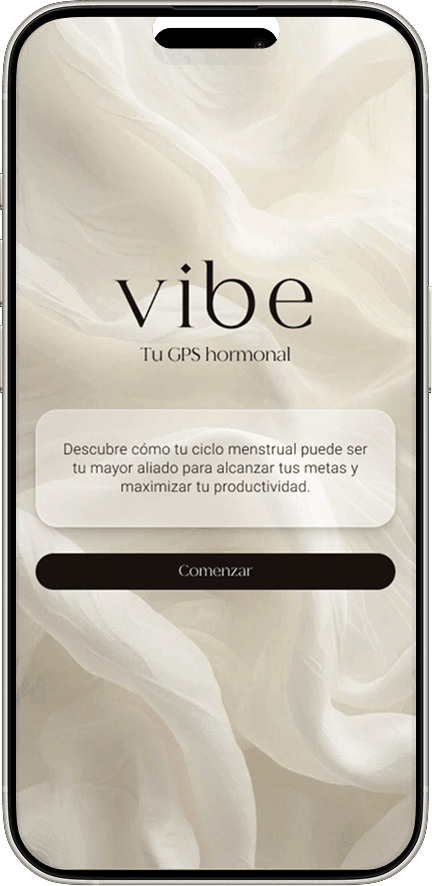
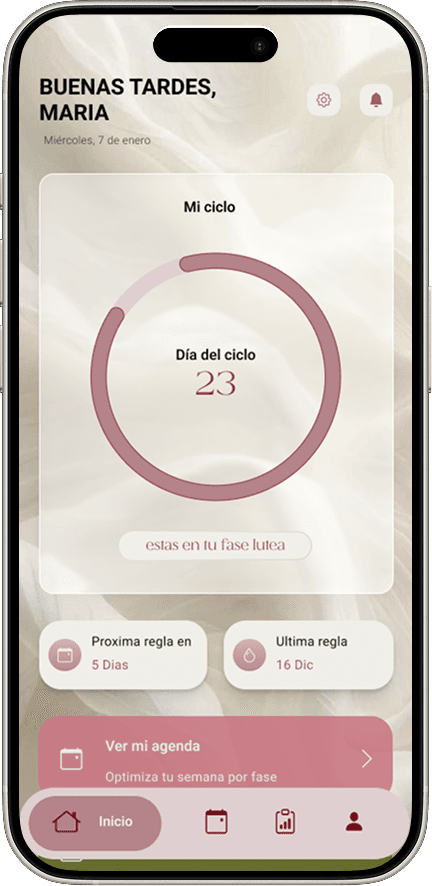
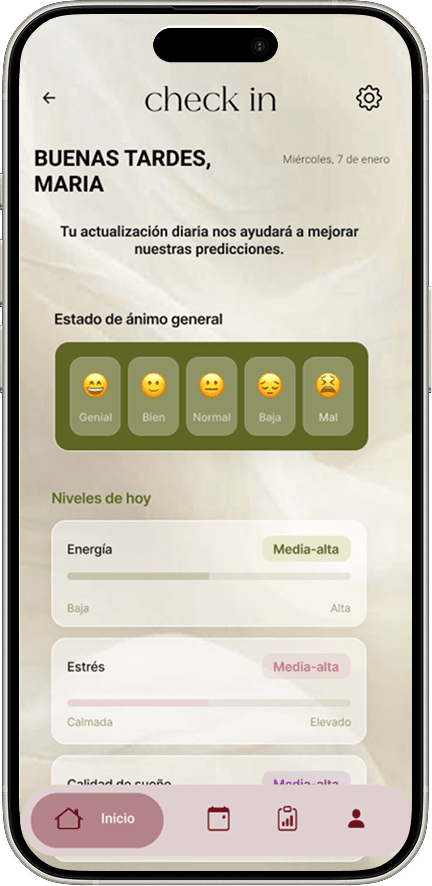
- The product
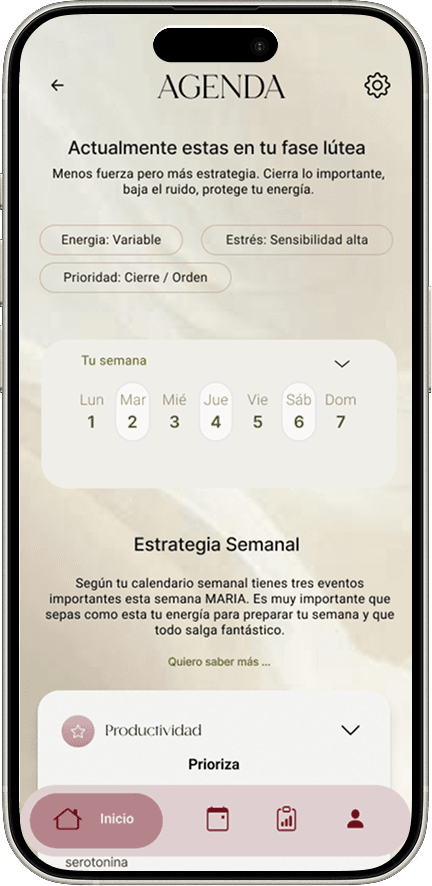
- Vibe (Variable Infradian Biological Efficiency) is a FemTech app that translates the four phases of the cycle — menstrual, follicular, ovulatory and luteal — into actionable recommendations for training, working, resting and planning. It doesn't just record data: it interprets it and turns it into daily guidance.
- My role
- An end-to-end product-design project: research (desk research, netnography, benchmarking, SWOT and surveys), synthesis (user personas, empathy maps and user journeys), concept, value proposition and visual direction.
- Audience
- Professional women who want to perform sustainably without fighting their biology, from the junior consultant optimizing her training to the executive in perimenopause who no longer fits the “28-day” model.
- The challenge
- Turn symptom tracking into actionable daily decisions, without becoming a “fertility tracker” or adding mental load.
- Scope
- A conceptual postgraduate project, with no historical database to train algorithms; the challenge was to design a credible, inclusive experience across irregular cycles, contraception and perimenopause.
The conflict
The modern standard of living demands that we operate on a circadian rhythm (linear, 24 hours), ignoring that female biology runs on an infradian cycle of around 28 days. That disconnect forces women to sustain constant productivity and a constant emotional state, which breeds frustration, guilt and a sense of losing control when their energy naturally fluctuates. Today's tools stop at reproductive tracking and leave a gap in day-to-day management.
The process — Design Thinking
I structured the project with Design Thinking. In Observe I combined desk research, netnography, benchmarking, a SWOT matrix and a survey of 69 people. In Synthesize I built two user personas, their empathy maps and user journeys, and a needs matrix. The question that guided every decision: “How might we help women use their cycle to plan energy, mood and performance, turning tracking into actionable decisions without adding mental load?”
Key findings
Research surfaced a critical disconnect between intuition and the tool, and a clear shift in expectation: from “tracking” data to “getting instructions.” Women see the crash coming but have no digital airbag to prepare them; and they explicitly reject childish language and invasive notifications.
Positioning
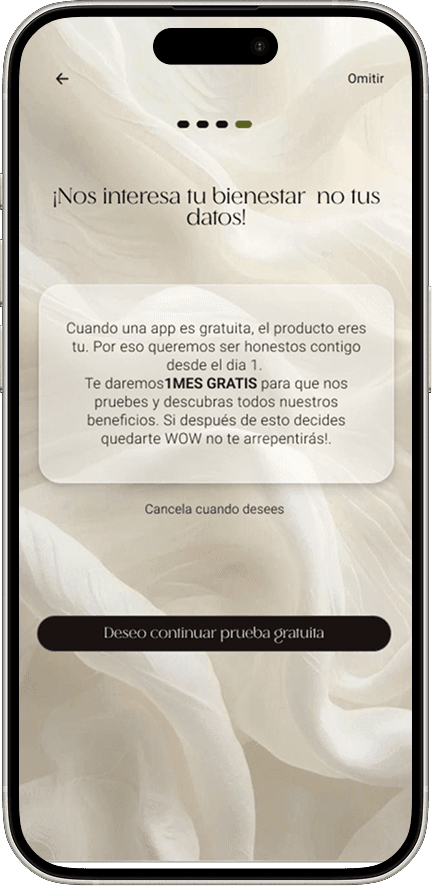
Against Flo, Clue or Apple Health — focused on reproductive prediction — Vibe positions itself in action: practical instructions per phase and syncing with the calendar and stress, with an executive aesthetic (far from the childish “pink”) and radical privacy, with no selling of data to third parties. Its value proposition, the “hormonal GPS,” didn't exist in the market.
The proposal
Vibe turns the cycle into a personal operating system: less improvising and guilt; more clarity, sustainable performance and measurable wellbeing, week by week, based on your biology. The algorithm was designed to be inclusive of irregular cycles, contraception and perimenopause, so it never frustrates the women who don't fit the standard model.
Vibe
From cycle data to daily guidance
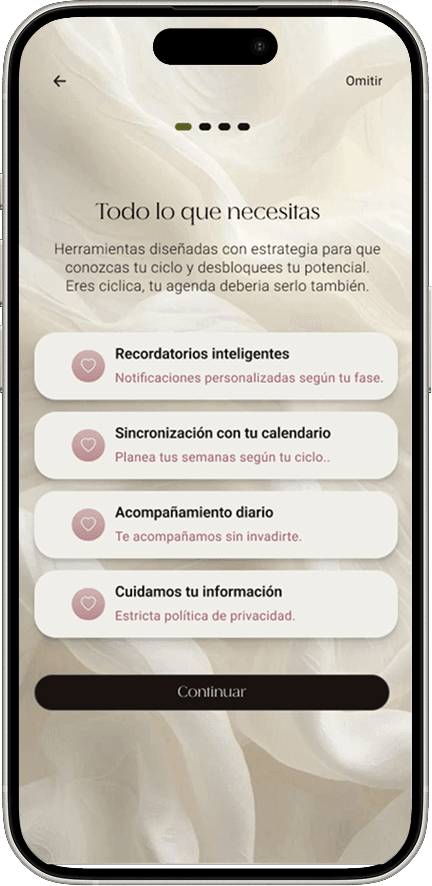
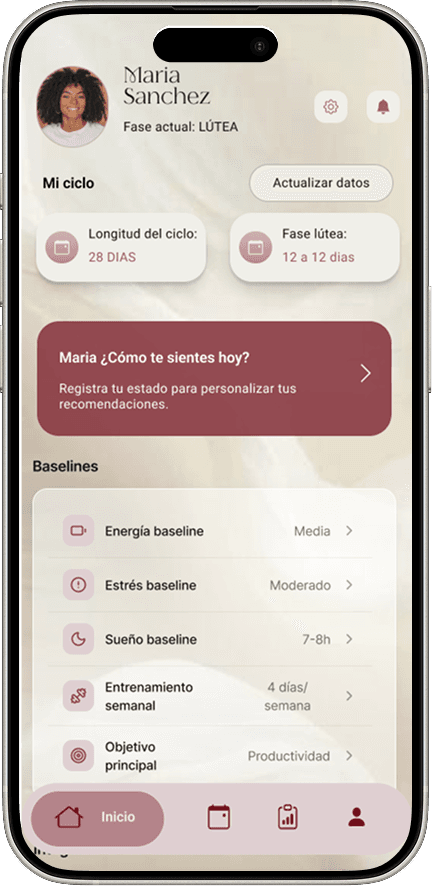
Nine screens show Vibe's core journey: a transparent introduction, cycle personalization and the tools that turn data into everyday decisions.
.16-bm1wztutx3.png&w=3840&q=75)
.0acv45nneyx8u.png&w=3840&q=75)